Signs Your Pflugerville Home Has Galvanized or Polybutylene Pipes
By the Pflugerville Pro Plumbing team. Updated 2026.
If your Pflugerville home was built in the 1980s or 1990s, there's a real chance your supply lines are galvanized steel or polybutylene rather than the copper or PEX used in newer construction. Neither material has aged well, and knowing which one you have changes how urgently a repair or repipe is worth considering.
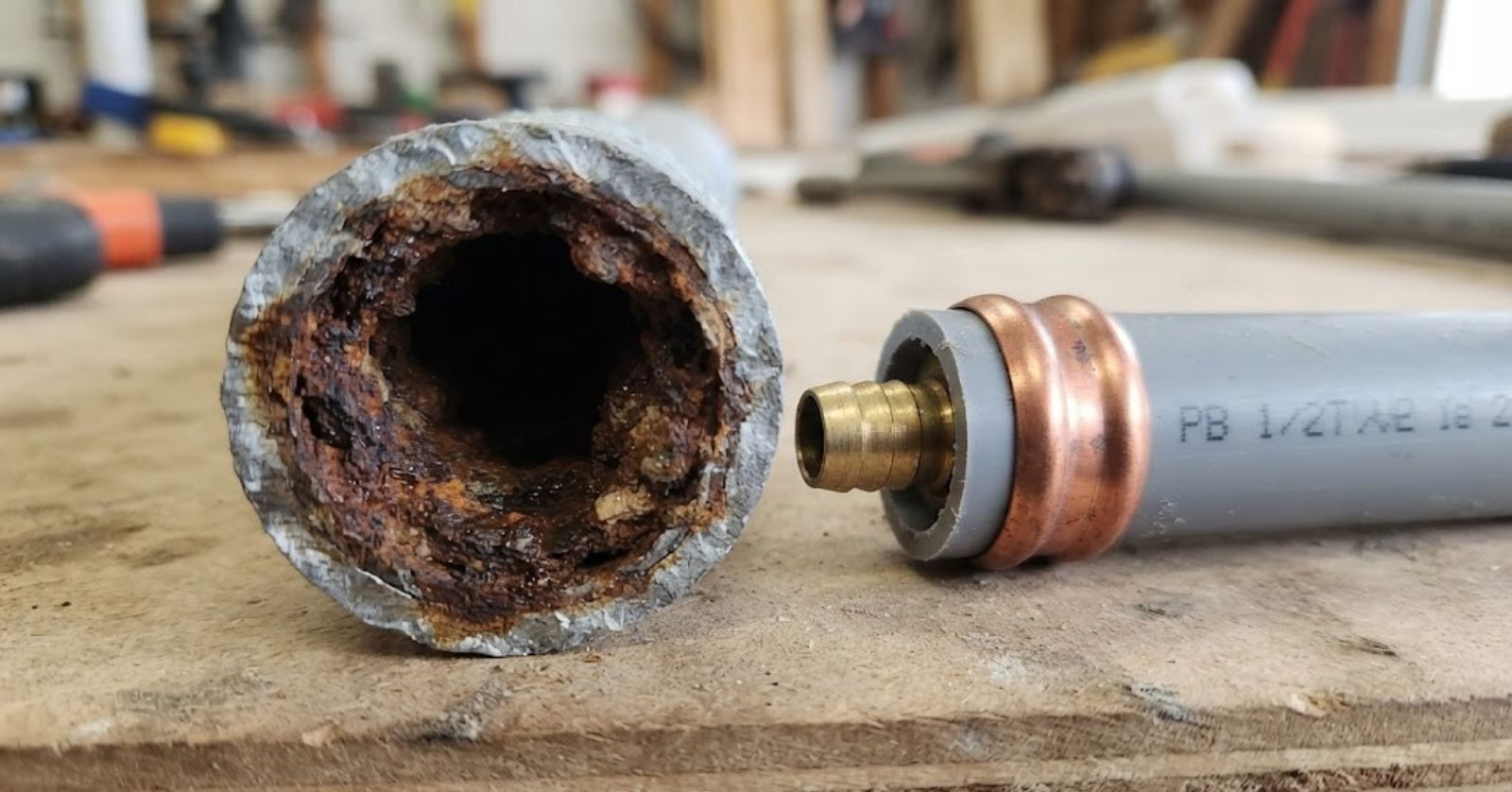
Why This Matters More in Pflugerville
Pflugerville's housing stock genuinely spans this window. A lot of the city's original neighborhoods were built during exactly the period when galvanized steel was being phased out and polybutylene was being phased in. Later pulled from the market industry-wide after widespread fitting failures. That means a meaningful share of homes here are running on one of these two materials right now without the homeowner necessarily knowing it.
The practical stakes are different from a purely cosmetic home issue. A supply line failure inside a wall or under a slab can go unnoticed for a while. Cause real water damage once it finally lets go, which is part of why knowing your pipe material ahead of time is worth the effort rather than finding out during an emergency.
How to Identify Galvanized Pipe
Galvanized pipe is a dull gray steel, threaded rather than soldered or glued at the joints, and it's magnetic, a fridge magnet will stick to it. It's most visible where a supply line enters a water heater or crosses an unfinished space like a garage wall or crawlspace. Over decades, galvanized pipe corrodes from the inside, which is why the classic sign isn't a leak at first, it's shrinking water pressure as mineral buildup narrows the interior diameter.
How to Identify Polybutylene
Polybutylene is a gray or off-white flexible plastic pipe, usually connected with metal crimp rings rather than glued PVC-style fittings. It was marketed as an affordable, easy-to-install alternative to copper through the late 1970s into the 1990s. It's since become one of the more widely known problem pipe materials in residential plumbing, largely because it tends to fail at the fitting rather than along the pipe itself, often without much warning.
Where to Check First
The water heater connection point is usually the fastest place to check. Both supply lines are typically visible and unobstructed there. A crawlspace or unfinished garage wall is the next best spot. If your home has an attic with exposed plumbing runs, that's worth a look too, though for a two-story home this isn't always practical to check without help.
What to Do If You Have Either One
Neither material means an emergency by itself. A galvanized system that's still delivering decent pressure and hasn't leaked can be monitored. A leak detection inspection is a reasonable step if you're seeing pressure drop off over the past year or two. Polybutylene is a different calculus. Its failures tend to be sudden rather than gradual, which is why many plumbers, us included, are more inclined to recommend a planned repipe on polybutylene sooner rather than waiting for the first failure to force the decision.
A whole-house inspection is the most reliable way to settle the question either way. We check pipe material at several access points, note the home's age and any documented plumbing history, and give you a straight answer about whether what you have is something to monitor or something worth addressing proactively.
What a Planned Repipe Looks Like
If an inspection points toward a proactive repipe, PEX is generally the practical replacement choice for a home this age. It resists the internal corrosion that affects galvanized pipe and avoids the fitting failures polybutylene is known for. Depending on the home's layout, much of the new line can often run through the attic and existing wall chases, which limits how much drywall needs to be opened up. Most single-family repipes are completed in a matter of days, not weeks, and we walk through water shutoff scheduling with you ahead of time so there are no surprises.
A Word on Insurance and Home Sales
Some homeowners insurance policies have specifically excluded or limited coverage for polybutylene-related damage due to its known failure history, which is worth checking in your own policy. It's also a detail that frequently comes up during a home inspection at resale, and addressing it proactively is generally viewed more favorably by buyers than leaving it for the next owner to discover.
Buying a Home With Either Material
If you're house hunting in Pflugerville and touring homes from this era, asking directly about pipe material, or having a plumbing-specific inspection done before closing, is a reasonable step. It's far easier to negotiate a repipe credit or plan for the cost before you own the home than to discover the issue after the fact.
If you suspect a leak from either material, our leak detection page covers how we locate it without guesswork demolition, and if the whole system needs addressing, our repiping page walks through what a whole-home repipe actually involves. We see the same housing-era pattern in Round Rock.
Common Questions
Is polybutylene pipe illegal to have in my home?
No, it's not illegal to keep existing polybutylene pipe, though it's no longer manufactured or installed in new construction due to its documented failure history.
Can galvanized pipe be repaired instead of replaced?
A single localized failure can sometimes be spot-repaired, but if the surrounding pipe shows the same corrosion, a broader repipe is usually the more durable fix.
Does homeowners insurance cover polybutylene pipe failure?
Coverage varies significantly by policy and by whether the damage was sudden versus gradual; check your specific policy language.
How long does a pipe material inspection take?
A straightforward inspection checking the main access points usually takes well under an hour, and you'll get a direct answer the same visit.
If my neighbor's house has polybutylene, does mine automatically have it too?
Not necessarily; even within the same subdivision, some homes were plumbed differently depending on when exactly they were built and which materials the builder was using at that point.
Does a repipe need to happen all at once, or can it be phased?
A full repipe is usually more efficient completed in one project, though a partial repipe targeting the worst-affected section first is a reasonable option if budget timing matters.
Will a home inspector always catch polybutylene pipe?
A thorough inspector often will, especially at visible access points, but it's not guaranteed on every inspection, which is part of why a dedicated plumbing inspection is worth considering separately.
Should I ask for a plumbing inspection before buying an older Pflugerville home?
It's a reasonable request, especially for homes built in the 1980s or 1990s, given how common both materials were during that specific window.
Can a plumber tell pipe material from outside the home?
Not reliably; an accurate read requires checking actual interior access points like the water heater connection or a crawlspace, not just an exterior visual guess.
What's the practical lifespan difference between galvanized and PEX?
Galvanized pipe typically lasts several decades before serious corrosion sets in, while PEX is generally rated for a comparable or longer service life without the same internal corrosion risk.
Not Sure What Pipe Material You Have?
Call for an inspection, we'll tell you honestly what we find.
Call (512) 737-6168