Repiping & Whole-Home Pipe Replacement in Pflugerville, TX | Pflugerville Pro Plumbing
Homes across Pflugerville built with galvanized steel or polybutylene supply lines in the 1980s and 1990s are reaching the point where repeated spot repairs cost more over time than a single whole-home repipe. We assess which situation a given house is actually in before recommending either one.
What Causes This in Pflugerville Homes
Galvanized steel pipe corrodes from the inside over decades, gradually narrowing the interior diameter and eventually developing pinhole leaks at multiple points along the same run. Polybutylene, used widely through the 1990s before being phased out industry-wide, is prone to failure at its fittings regardless of visible corrosion, which is why a polybutylene system can look fine on the outside right up until a fitting fails.
Signs You Need Repiping
Multiple Leaks Over Time
A second or third pinhole leak in the same system within a year or two is a strong sign of widespread corrosion, not isolated bad luck.
Low Water Pressure Throughout the House
Corroded galvanized pipe narrows over its whole length, which shows up as reduced pressure at every fixture, not just one.
Discolored Water at Multiple Fixtures
Rust-tinted water from more than one tap points to pipe wall corrosion rather than a single failing fixture.
Known Polybutylene System
A home built in the 1980s or 1990s with gray plastic pipe and metal crimp fittings likely has polybutylene, a material widely considered failure-prone industry-wide.
How We Diagnose and Fix It
We start with a whole-house assessment. Checking pipe material at multiple access points, testing water pressure at several fixtures, and reviewing the home's leak history, since a single isolated leak on an otherwise sound system doesn't need the same fix as a system showing corrosion in more than one place.
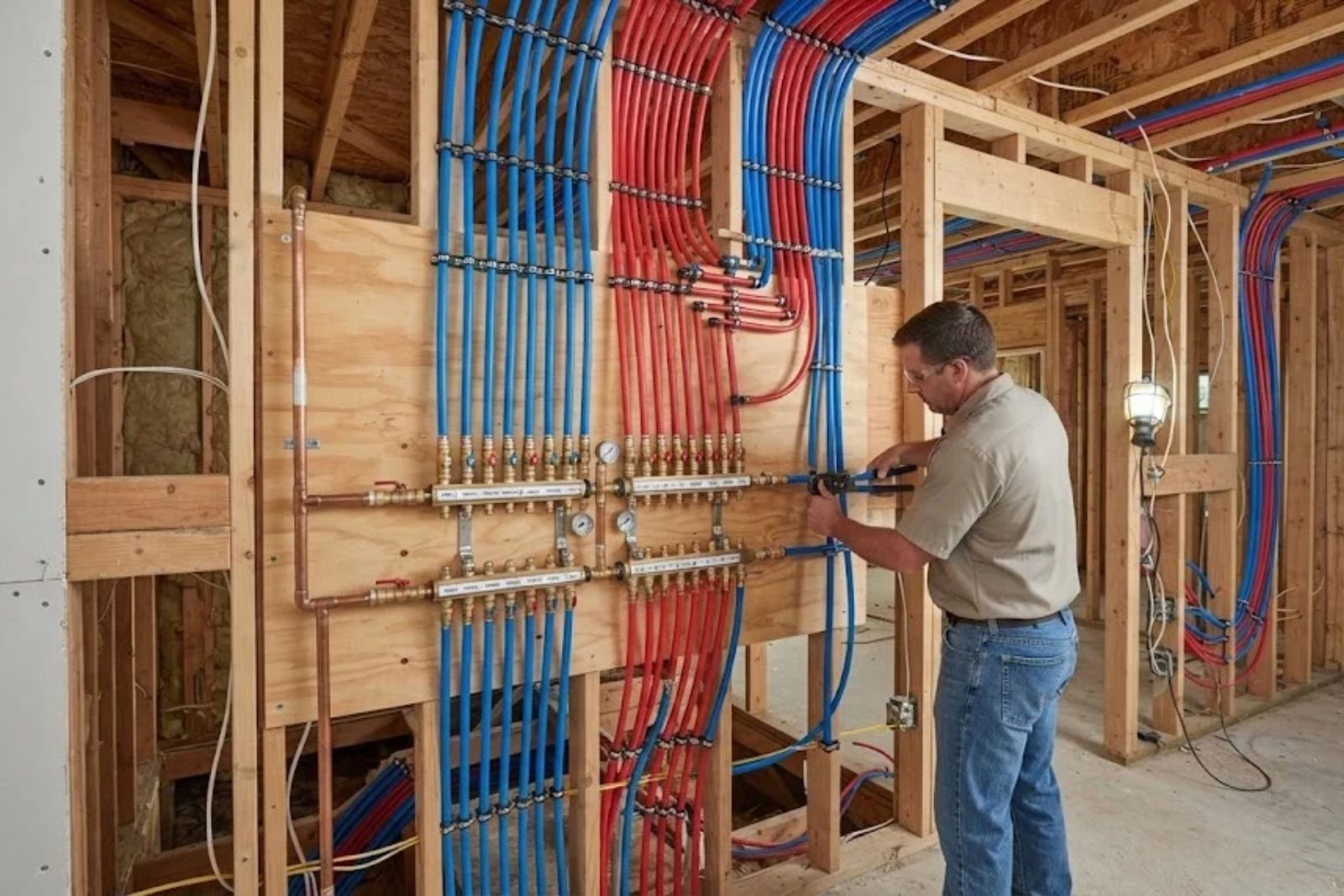
For a repipe itself, PEX is generally the practical choice for a home this age, since it resists the corrosion that affects galvanized pipe and the fitting failures associated with polybutylene. It can often be run through existing wall and floor cavities with less demolition than rigid copper.
Second Leak in the Same System?
If this isn't the first leak you've had in the last year or two, that pattern usually means the pipe itself is failing throughout the house, not just at the one spot we're fixing today.
Repair vs. Replacement
The choice between another spot repair and a full repipe comes down to how widespread the underlying problem actually is.
Continued Spot Repairs
- Lower cost per individual repair.
- Makes sense for a single, isolated failure.
- Doesn't address system-wide corrosion.
- Repair costs add up over repeated failures.
Whole-Home Repipe
- Addresses the underlying corrosion or fitting issue directly.
- PEX resists both problems galvanized and polybutylene have.
- Fewer future emergency repair calls.
- Better long-term value on a system already showing multiple failures.
What It Costs
Repipe pricing depends mainly on the home's square footage, number of fixtures, and how much wall or floor access is required.
A planned repipe due to aging pipe material is generally not covered by homeowners insurance, since it's considered a maintenance upgrade rather than sudden damage. Want your real number? Call (512) 737-6168.
Before recommending a full repipe, we confirm the scope of the problem with the same equipment described on our leak detection page, and a leak specifically under the slab gets the more targeted approach covered on the slab leak detection and repair page. If a section has already failed outright, that's an emergency call handled on our burst pipe repair page rather than a planned repipe. We assess the same 1980s-90s pipe systems for Wells Branch homeowners.
Common Questions
How do I know if my house has polybutylene pipe?
It's typically gray plastic pipe with metal crimp fittings, common in homes built through the 1990s; we can confirm during an inspection.
Does a repipe mean opening up every wall?
Not necessarily. Depending on the home's layout, much of the new PEX line can be run through the attic and existing chases with limited wall access.
How long does a whole-home repipe take?
It varies by home size, but most single-family repipes are completed in a few days rather than weeks.
Can I repipe just part of the house?
Yes, a partial repipe of the worst-affected section is an option if the rest of the system tests sound.
Still have a question about Repiping in Pflugerville? Call (512) 737-6168 and we'll answer it directly.
Multiple Leaks in the Same System?
Call for a whole-house assessment and an honest recommendation.
Call (512) 737-6168