How to Shut Off Your Main Water Valve Before the Plumber Arrives
By the Pflugerville Pro Plumbing team. Updated 2026.
In the middle of a burst pipe or an active leak, the single most useful thing you can do before help arrives is shut off your home's main water valve. It's worth knowing where yours is before you actually need it.
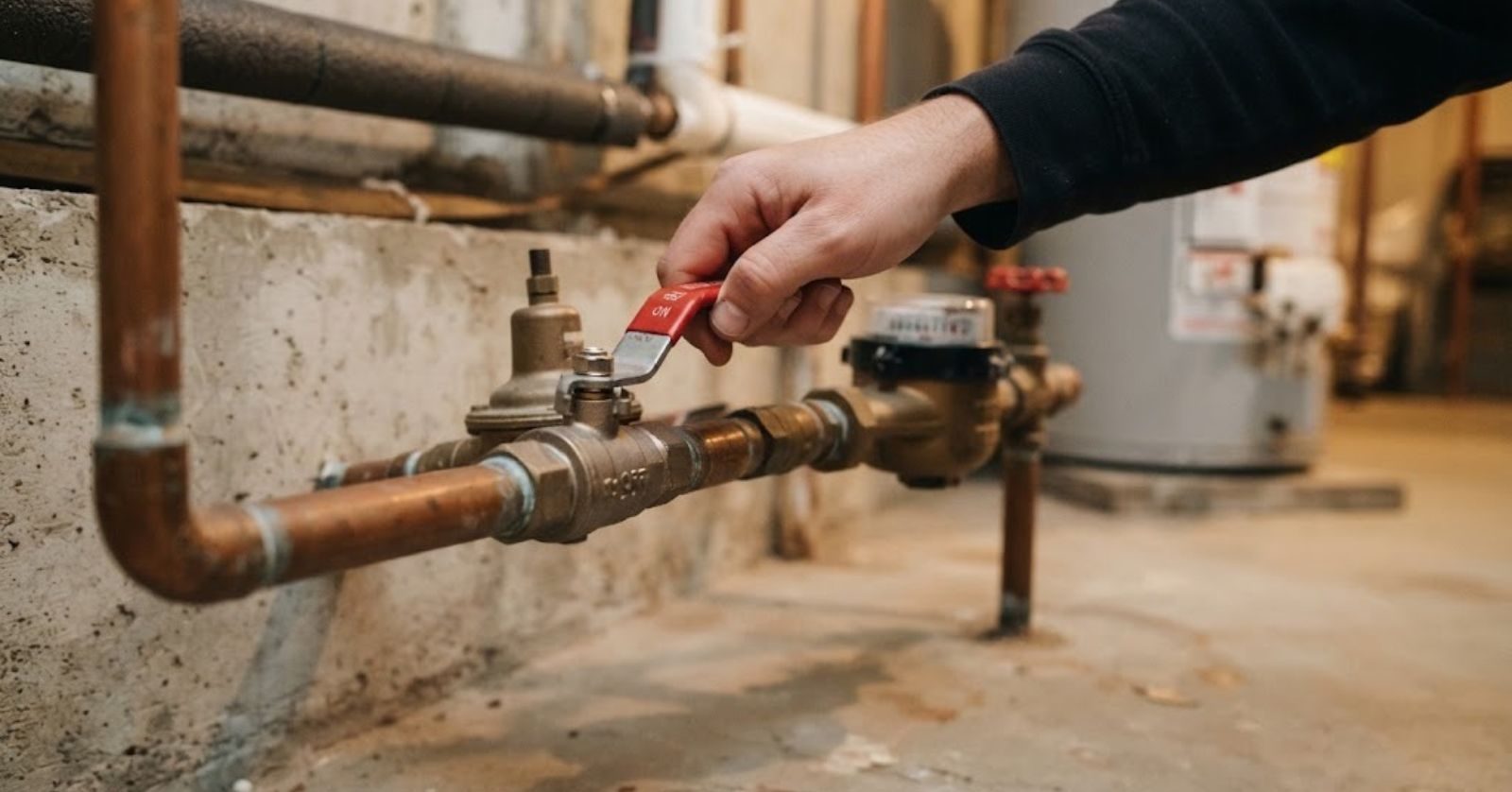
Where to Find Your Main Shutoff Valve
In most Pflugerville homes, the main shutoff is located near where the water line enters the house. It's often in a front yard valve box near the water meter, or inside near the water heater or a utility closet on the street-facing side of the home. Homes with a basement or crawlspace sometimes have it there instead. If you've never located yours, doing it now, on a calm day, is worth the ten minutes.
How to Turn It Off
A gate valve, the older wheel-style handle, turns clockwise until it stops. A ball valve, a lever-style handle common on newer installs, is off when the lever sits perpendicular to the pipe. Either way, turn firmly but don't force a valve that hasn't been touched in years, since older valves can seize; if it won't budge, that's information for us rather than something to force by hand.
What Shutting Off the Main Actually Does
Closing the main stops water from entering your home's plumbing system entirely, which is different from shutting off a single fixture's supply valve under a sink or behind a toilet. For a whole-house emergency like a burst pipe in a wall, the main is what actually stops the flow; an individual fixture shutoff only helps if the problem is isolated to that one fixture.
After You've Shut It Off
Once the main is closed, open a low faucet, like an outdoor spigot or a ground-floor sink, to relieve pressure in the system and let remaining water drain out. Then call. Having the main already closed when we arrive means we can go straight to diagnosing and fixing the problem instead of spending the first several minutes stopping the flow.
Individual Fixture Shutoffs Are Worth Knowing Too
Most sinks and toilets have their own small shutoff valve on the supply line underneath, usually a simple quarter-turn oval handle. For a leak isolated to one fixture, like a toilet or a bathroom sink, closing that individual valve can stop the problem without shutting off water to the rest of the house. That matters if other people still need to use water elsewhere while waiting for us to arrive.
Testing Your Main Valve Before You Need It
A valve that's never been operated can seize over the years, which is exactly the wrong time to discover that. Turning your main valve fully closed and back open once every year or so, even briefly, keeps it functional and gives you real confidence it'll work when you actually need it during an emergency.
What If Your Home Has No Accessible Shutoff
Occasionally a main valve is buried, painted over, or otherwise inaccessible without some work. If that's the case in your home, it's worth having us install an accessible replacement valve during a routine visit rather than discovering the problem during an actual emergency, when there's no time to fix the access issue first.
Why This Matters More Than People Expect
The gap between a pipe failing and someone actually stopping the water is the single biggest factor in how much damage a burst pipe or major leak ends up causing. A homeowner who can shut off the main within the first minute or two often sees a fraction of the damage compared to one who spends ten or fifteen minutes searching for the valve or waiting for help to arrive to do it.
Teaching Everyone in the Household
It's worth making sure more than one person in the household knows where the main valve is and how to operate it, not just whoever handles home maintenance. A plumbing emergency doesn't wait for the right person to be home, and having multiple people able to respond immediately meaningfully reduces how much damage occurs before the water is actually stopped.
What to Do in an Active Water Emergency
- Shut off the main water valve.
- Open a low faucet to relieve pressure.
- Avoid contact with standing water near outlets or panels.
- Move valuables away from the affected area if it's safe to do so.
- Call our emergency line.
If you're dealing with an active burst pipe right now, our burst pipe repair page covers what happens once we arrive. If water has already reached flooring or drywall, our water damage restoration team handles that separately from the pipe repair itself. We respond to the same emergencies for Manor homeowners.
Common Questions
What if I can't find my main shutoff valve?
Call us and we can help locate it over the phone, or we'll find it quickly on arrival; in the meantime, shutting off the valve at the specific fixture that's leaking, if there is one, can help.
Is it normal for an old shutoff valve to be hard to turn?
Yes, a valve that hasn't been operated in years can seize or become stiff; if yours won't turn, don't force it, and let us know so we can address it safely.
Should I shut off my water heater too during an emergency?
If the leak is unrelated to the water heater, it's not strictly necessary, but shutting off the cold water supply to the water heater is a reasonable extra precaution during a whole-house shutoff.
Can I replace an old, stuck main valve myself?
This isn't a job we'd recommend as a DIY project, since it involves working on the main supply line itself; a stuck valve is something we can replace during a routine visit.
How often should I actually test my main valve?
Once or twice a year is a reasonable habit, just enough to keep it from seizing without being an inconvenience.
Does every home have just one main shutoff valve?
Most single-family homes have one primary main valve, though some properties, especially those with irrigation systems or secondary structures, may have additional isolation valves worth knowing about too.
Should kids in the household know how to shut off the water?
For older children capable of safely operating a valve, yes, it's a reasonable safety skill to teach, alongside knowing when to actually call an adult versus handle it themselves.
Is there a difference between a shutoff valve and a pressure regulator?
Yes, a pressure regulator controls incoming water pressure and isn't meant to fully stop flow; the main shutoff valve is the correct control for a full emergency stop.
Does homeowners insurance ever require proof of a working shutoff valve?
Not typically as a standard requirement, though demonstrating reasonable preventive maintenance, including a functional main valve, generally supports a smoother claims process if damage ever occurs.
Is a shutoff valve the same thing as a stop valve?
Yes, the terms are generally used interchangeably to describe a valve that fully stops water flow to a fixture or the whole house.
Active Water Emergency Right Now?
Shut off your main valve if you can, then call. We're on the way.
Call (512) 737-6168