Why Does My Toilet Keep Running? Common Causes and Fixes
By the Pflugerville Pro Plumbing team. Updated 2026.
A toilet that runs continuously, or that runs briefly every few minutes even when no one has used it, almost always traces back to one of a handful of worn internal parts, and most of them are identifiable without taking the tank apart.
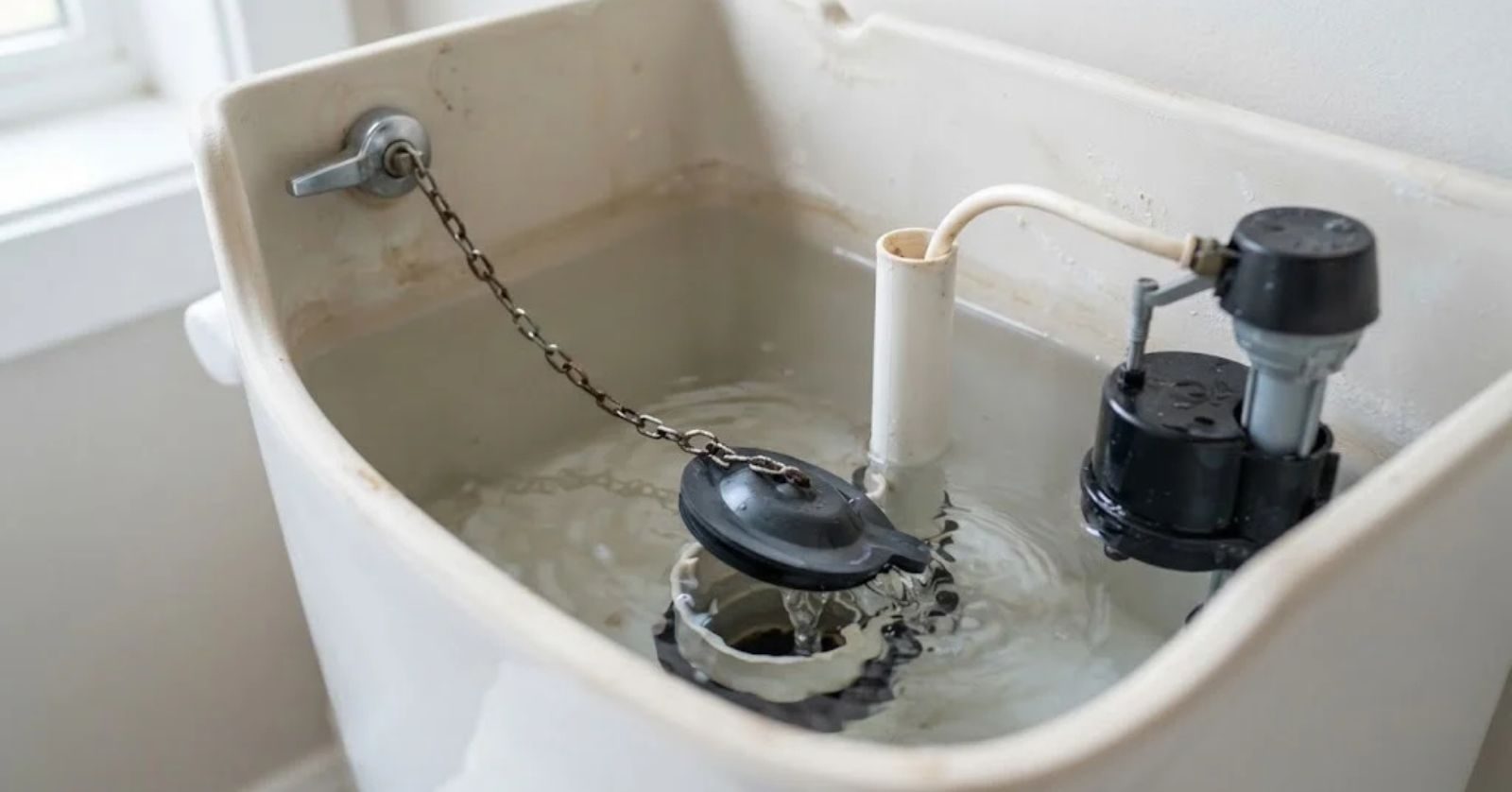
A Worn Flapper Is the Most Common Cause
The flapper is the rubber seal at the bottom of the tank that lifts when you flush and drops back to seal the tank. Over time it can warp, crack, or simply stop sealing fully, letting water slowly leak into the bowl, which the fill valve then tries to compensate for by periodically refilling the tank.
A Fill Valve That Won't Shut Off Fully
If the flapper checks out fine but the toilet still runs, the fill valve itself may not be shutting off completely once the tank reaches its target level. This often shows up as a toilet that runs continuously rather than in short, periodic bursts.
A Float Set Too High
If the water level sits right at or above the overflow tube, the tank continuously drains into the overflow, which the fill valve interprets as needing to keep refilling. Adjusting the float to sit slightly below the overflow tube's top often resolves this without replacing any parts.
When It's Worth Calling Instead of DIYing
A basic flapper swap is a reasonable DIY fix for many homeowners. But a toilet that keeps running after a flapper replacement, an old toilet with multiple aging components at once, or a running toilet paired with a wobbly base or water at the floor are all signs the issue is bigger than a single part. Those situations are worth having looked at directly.
A Cracked Overflow Tube or Tank Component
Less commonly, a crack in the overflow tube itself or a failing fill valve gasket can cause a slow, hard-to-diagnose leak that isn't fixed by a flapper replacement. These are less obvious than a worn flapper and usually require actually removing the tank lid and testing each component individually to isolate.
Older Toilets and Compounding Issues
A toilet original to a 1980s or 1990s Pflugerville home has often accumulated wear on more than one component at once, the flapper, the fill valve, and sometimes the flush valve seat itself. In that situation, replacing just one part sometimes only partially resolves a running toilet, which is why a full diagnostic pass on an older unit tends to be more reliable than guessing at a single fix.
How Toilet Parts Have Changed Over the Years
Older toilets often use a ballcock-style fill valve with a floating ball on an arm, while most modern replacements use a simpler float-cup design that's generally more reliable and easier to adjust. If your toilet still has the older mechanism and keeps having problems, upgrading to a modern fill valve during a repair is often a worthwhile improvement rather than just replacing the same aging part type.
When a Running Toilet Points to a Bigger Fixture Decision
If a toilet has needed more than one or two repairs in a short span. If it's a pre-1994 high-flow model already due for an upgrade on water-usage grounds, it's worth weighing continued repairs against replacement. A new toilet resolves the running issue at its source and, for an older high-flow model, reduces water usage meaningfully going forward too.
A Note on DIY Repair Kits
Universal repair kits sold at hardware stores work well for many standard toilets. Fit and compatibility vary more than people expect across brands and models. A kit that doesn't quite match your toilet's specific valve or flapper design can seem to fix the problem temporarily, only for the running to return within days or weeks, which is a common reason we get called after a DIY attempt.
If the DIY checks don't resolve it, our toilet repair and installation page covers how we diagnose and fix a running toilet properly, including when replacement makes more sense than another repair. The same worn-part pattern shows up in a dripping faucet too, covered on our faucet and sink repair page. We handle the same calls for Hutto homeowners.
Common Questions
How much does a running toilet actually cost me?
A continuously running toilet can waste hundreds of gallons a day, which is often enough to meaningfully raise a monthly water bill on its own.
Can I test which part is causing it myself?
A simple food-coloring test in the tank, checking whether color appears in the bowl without flushing, confirms a flapper leak specifically; if the tank is audibly running instead, that points more toward the fill valve or float.
Is a running toilet ever a sign of a bigger plumbing problem?
Usually not on its own, it's typically an isolated worn part, though a toilet that also clogs frequently or rocks on the floor is worth a broader look.
How long does a typical toilet repair take?
Most flapper, fill valve, or float adjustments are completed within an hour; a full valve assembly replacement can take a bit longer.
Is it worth replacing an old toilet instead of continuing to repair it?
If it's a pre-1994 high-flow model with multiple aging components, replacement is often more cost-effective long-term than repeated individual repairs.
What's the difference between a ballcock and a float-cup fill valve?
A ballcock uses a floating ball on an arm to control water level, an older design; a float-cup valve uses a cup that slides along the valve body and is generally more reliable and easier to adjust.
Can hard water make a running toilet problem worse?
Yes, mineral buildup on the flapper seat or inside the fill valve can prevent a proper seal even on a relatively new part, which is one more reason hard water areas see this issue somewhat more often.
Why did a hardware store repair kit not fix my toilet?
Universal kits don't always match a specific toilet's valve or flapper design precisely; an imperfect fit can seem to work briefly before the running returns.
Is it normal for a brand-new toilet to run occasionally?
Not really; a properly installed new toilet shouldn't run persistently, and any running in the first weeks is worth addressing under warranty rather than assuming it's normal break-in behavior.
Can a running toilet damage the floor underneath it?
A running toilet itself is unlikely to cause floor damage on its own; that risk comes more from a separate seal leak at the base, which is worth checking at the same time.
Do all toilets use the same size flapper?
No, flapper sizes and designs vary by manufacturer and model, which is exactly why matching the specific part matters more than grabbing the first universal kit available.
Can a running toilet be a sign of a problem with the whole-house water pressure?
Not typically; a running toilet is almost always isolated to that fixture's own internal components rather than reflecting anything about the broader home's water pressure or supply system.
Is it worth replacing all the toilets in a home at once if one is failing?
Not necessarily; unless the others show similar age-related symptoms, addressing the one that's actually failing is usually the more practical approach.
Toilet Still Running After You've Checked the Flapper?
Call for same-day toilet repair.
Call (512) 737-6168